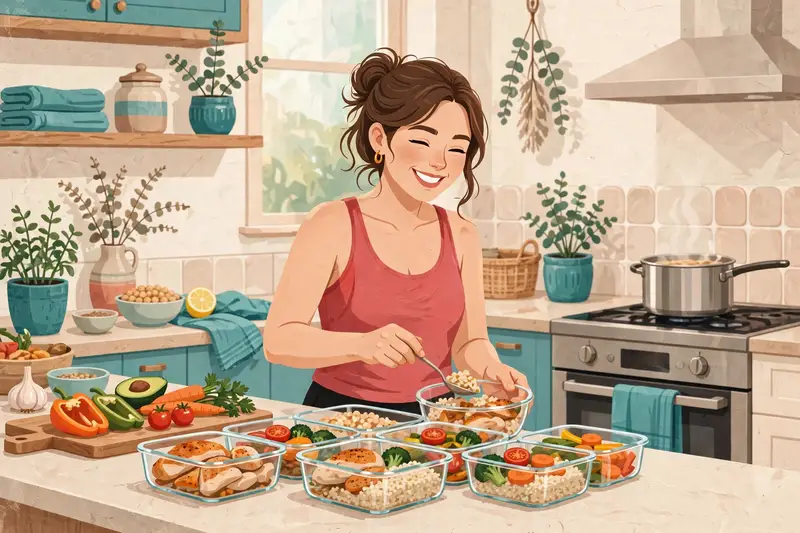
I used to think meal prep was something other people did. You know the kind of people I mean. The ones with matching containers lined up in perfect rows, a whiteboard full of plans, and a Sunday afternoon that somehow always went exactly as scheduled. My life did not look like that. My fridge had good intentions and half-used bags of spinach, and by Wednesday I was standing in front of it wondering how dinner was supposed to happen.
What changed things for me was not a new diet or a stricter plan. It was a much smaller idea. I gave myself one relaxed cooking session a week, and I stopped trying to cook a different full meal for every single day. Instead, I cooked a few simple building blocks, put them in containers, and mixed and matched them through the week. That one shift made my evenings calmer, my grocery trips shorter, and my lunches a lot less last-minute. It even made my meals after a workout easier, since something good was already waiting in the fridge. If you want ideas for that part of the day, I wrote about what to eat after a workout for muscle recovery in a separate article.
If you are new to meal prep, this is the place to start. You do not need special equipment, a huge block of free time, or a perfect plan. You need a protein or two, a grain you like, some vegetables, a few containers, and about ninety minutes once a week. In this article, I will walk you through the exact simple system I use, share a sample week of lunches and dinners, and show you how to keep it flexible so you never feel stuck eating the same thing every day.
What Meal Prep Really Means (and What It Does Not)
Meal prep is often shown as a big production, but at its heart it is just cooking ahead a little. It means making some food now so future you has an easier time later. That is all. It does not mean cooking twenty-one identical meals, weighing every bite, or giving up foods you enjoy. It does not mean your fridge has to look like a photo from a magazine.
For beginners, I think the best definition is this: meal prep is preparing parts of meals in advance. You might cook a batch of chicken, a pot of rice, and a tray of roasted vegetables. You might wash and chop vegetables, cook a pot of beans, or make a big salad dressing. Later in the week, you put those parts together in different ways. One day the chicken goes over rice with roasted broccoli. Another day it goes into a wrap with hummus and cucumber. Same building blocks, different meal.
Why One Cooking Session Works Better Than Seven
When I cooked every meal from scratch, I was tired before I even started. I had to decide what to make, check what I had, chop everything, cook, and clean up, three times a day. By the end of the day, I had made so many small decisions that dinner felt like one decision too many. That is why so many of us reach for the easiest option at night, even when we had good plans in the morning.
One cooking session changes the math. You make the decisions once, you get out the cutting board once, you turn on the oven once, and you clean up once. Then, for the rest of the week, most of your meals are already partway done. You are not starting from zero each time. You are just assembling, warming, and adding a fresh touch.
The Mix-and-Match Formula: Protein + Grain + Vegetables
If you remember only one idea from this article, let it be this one: protein plus a grain plus vegetables. That simple formula is the base for almost every lunch and dinner I prep. It gives you staying power, fiber, color, and flavor, and it leaves plenty of room to change things up. You do not need a complicated recipe to make it work.
If you are still learning how much protein to aim for at meals, my article on how much protein women need is a helpful place to start. It explains the basics in plain language and can help you decide how to build your plate without overthinking it.
Pick Your Proteins for the Week
Protein is the part of the meal that often takes the longest to cook, so it makes sense to cook it ahead. When it is ready in the fridge, the rest of the meal comes together fast. I usually cook two proteins each week. One is often chicken, and the other changes. Sometimes it is ground turkey, sometimes it is salmon, sometimes it is a pot of lentils or a tray of baked tofu.
Chicken breasts or thighs are a good place to start because they are simple to season and easy to use in many meals. I season them with salt, pepper, garlic powder, and a little paprika, then bake them until they are cooked through. Once they cool, I slice them and store them in a container. They work in bowls, wraps, salads, and soups all week.
Plant-based proteins are wonderful for prep too. Lentils cook in one pot with water and a bay leaf, and they keep well for several days. Chickpeas can be roasted with a little oil and seasoning until they are crisp on the outside. Black beans are as easy as opening a can, rinsing, and seasoning. Tofu holds up well when you press it, cube it, and bake it until the edges are golden.
Choose Grains That Hold Up
Grains are the steady, comforting part of the plate, and they are very easy to cook in a batch. Rice is the one I use most often. I cook a large pot, let it cool, and store it in a container. It reheats well with a splash of water, and it goes with almost everything. Brown rice takes a little longer to cook, but it holds its texture nicely through the week.
Quinoa is another favorite. It cooks in about fifteen minutes, and it has a light, nutty flavor. I rinse it before cooking, then simmer it until the water is absorbed. I let it sit for a few minutes, fluff it with a fork, and let it cool before I store it. It is lovely in bowls, salads, and stuffed peppers.
Vegetables That Stay Good for Days
Vegetables add color, crunch, and freshness to every meal, and some of them hold up much better than others after a few days in the fridge. Roasted vegetables are my first choice for prep. Broccoli, sweet potatoes, carrots, zucchini, bell peppers, and cauliflower all roast well on a sheet pan. I toss them with a little olive oil, salt, and pepper, spread them in a single layer, and roast them until they are tender at the edges.
If you want more ideas for building balanced plates with plenty of vegetables, my clean eating meal plan for beginners walks through simple food choices and gentle swaps you can use all week. It pairs well with the mix-and-match system in this article.
A Simple Cooking Session, Step by Step
Here is the relaxed session I use most weeks. It takes about ninety minutes from start to finish, including cleanup, and most of that time is waiting while things cook. You do not need to rush. Put on some music, pour yourself a glass of water, and take it one step at a time.
First, I turn on the oven and start the grain. I preheat the oven to 400 degrees Fahrenheit, rinse my rice or quinoa, and get it simmering on the stove. While it cooks, I line a sheet pan with parchment paper and chop my vegetables. I toss them with oil and seasoning and slide the pan into the oven once it is hot.
Next, I season the protein and get it cooking. If I am baking chicken, it goes on a second sheet pan or in a baking dish. If I am cooking ground turkey, I heat a skillet and start browning it. If I am cooking lentils, I put them in a pot with water and let them simmer. The goal is to have the oven and the stove working at the same time.
When the food is done, I let it cool for a little while before I pack it. Hot food in a sealed container can create steam, and that steam can make things soggy. I spread rice on a plate to cool faster, and I let roasted vegetables sit on the pan for ten minutes. Once everything is warm rather than hot, I pack each item in its own container and label it with the day I cooked it.
A Sample Week of Lunches and Dinners
A sample week helps you see how the system works in real life. This is not a strict plan you must follow exactly. It is an example to show you how the same building blocks can turn into different meals. Feel free to swap proteins, change grains, or use vegetables you like better. The pattern matters more than the exact foods.
For this sample, imagine you prepped baked chicken, a pot of lentils, brown rice, quinoa, roasted sweet potatoes and broccoli, plus fresh cucumber, bell peppers, and salad greens. You also have hummus, salsa, olive oil, lemon, and a simple vinaigrette in the fridge. That is plenty to work with, and it can carry you through the week.
On Monday, lunch could be a chicken and rice bowl with roasted broccoli and a squeeze of lemon. Dinner could be lentils over quinoa with roasted sweet potatoes and a simple salad on the side. Both meals use your prepped foods, and both take only a few minutes to put together. You are not cooking from scratch. You are assembling.
On Friday, lunch could be a simple plate of chicken, rice, and the last of the roasted vegetables. Dinner could be a lighter meal, like a salad with lentils and fresh vegetables, or a quick soup made from your leftovers. By Friday, your prepped foods are running low, and that is fine. You have used them well, and you can start fresh with a new prep session.
Snacks can be simple too. A piece of fruit, a handful of nuts, yogurt, hummus with vegetables, or a small handful of popcorn can work well between meals. If you want more snack ideas, my article on healthy snacks for weight loss has plenty of easy options that pair well with a meal prep routine.
How to Store It So It Actually Tastes Good
Good storage makes a big difference. Food that is stored well tastes better, stays fresh longer, and is much more pleasant to eat on day three or four. Food that is stored poorly can get soggy, dry, or dull, and that makes you less likely to enjoy your prep. A few simple habits can help a lot.
The first habit is to store foods separately when you can. Keep the protein in one container, the grain in another, and the vegetables in a third. That way, each item keeps its own texture, and you can reheat only what needs warming. A salad stays crisp when the dressing is separate. Rice stays fluffy when it is not mixed with wet vegetables too early.
Containers That Make Life Easier
You do not need a fancy set of containers to start meal prep. You can begin with what you already have. Clean jars, reusable containers with lids, and even small bowls covered with a plate can work in the short term. The best container is the one you already own and will actually use.
As you get more comfortable, a few good containers can make the process smoother. I like glass containers with lids because they are easy to clean, they do not stain, and you can see what is inside without opening them. They are heavier than plastic, so I keep a few lighter ones for days when I carry lunch with me.
Freezing: Your Backup Plan
Freezing is one of the most underused tools in meal prep. It lets you save food before it goes to waste, and it gives you a backup meal for a week when life gets busy. If you cook a big batch of lentils, soup, or rice, you can freeze half of it and use it later. That is smart, not wasteful.
Some foods freeze better than others. Soups, stews, cooked beans, lentils, rice, and cooked chicken freeze well. Roasted vegetables can freeze too, though they may be softer when you reheat them. They are still great in soups, bowls, and wraps. Fresh salads, cucumbers, and tomatoes do not freeze well, so I keep those fresh and use them within a few days.
Keeping It Flexible So You Do Not Get Bored
The most common worry I hear about meal prep is boredom. Nobody wants to eat the same chicken and rice five days in a row. The good news is that you do not have to. Variety comes from small changes, not from cooking a different meal every night. A new sauce, a different grain, or a fresh topping can make the same protein feel brand new.
Paying attention while you eat can make even a simple prepped meal more enjoyable. When I slow down, put my phone aside, and really taste my food, I enjoy it more and I notice when I feel full. If you want to practice that skill, my article on mindful eating for weight loss shares gentle ways to bring more attention to your meals without strict rules.
A Beginner Grocery List to Start With
A short grocery list makes shopping faster and less stressful. You do not need to buy everything at once, and you do not need to buy foods you do not like. Start with the building blocks in this article, then add a few extras that make your meals taste good to you. Here is a simple list to get you started.
For proteins, pick two. You might choose chicken breasts or thighs and a can or two of chickpeas. Or you might choose ground turkey and lentils. Or salmon and black beans. Eggs are a useful extra, since they are quick to cook and easy to keep on hand. Choose proteins you enjoy and feel comfortable cooking.
For vegetables, pick three or four. I often choose broccoli, sweet potatoes, bell peppers, and cucumbers. Carrots, zucchini, green beans, and cauliflower are also good choices. Add salad greens if you like salads, and add onions, garlic, and lemons for flavor. Fresh herbs like parsley or cilantro are a nice extra if you enjoy them.
Here is a sample list you can copy and adjust:
- Chicken breasts or thighs, about two pounds
- Dry lentils or two cans of chickpeas
- Brown rice or quinoa
- Sweet potatoes, two medium
- Broccoli, one large head
- Bell peppers, two
- Cucumbers, two
- Salad greens, one large container
- Lemons, two
- Onions and garlic
- Olive oil, salt, pepper, and your favorite seasoning
- Hummus and salsa
- Eggs, one dozen
- Fruit for snacks, such as apples, bananas, or berries
If you are also thinking about gut health and how food choices affect digestion, my article on what to eat for gut health offers simple, practical ideas for foods that support a balanced diet. It is a gentle companion to the meal prep system in this article.
What to Do When the Week Goes Off Plan
Every meal prep plan will go off track sometimes. That is normal, and it does not mean you failed. Life happens. A work meeting runs late. A child gets sick. You feel tired and skip your prep session. You go out to dinner with friends. None of that erases the habit you are building. It just means this week will look a little different.
If you missed your prep day entirely, a mini-prep can help. Pick fifteen or twenty minutes and cook one thing. Hard-boil some eggs, cook a pot of quinoa, or wash and chop vegetables for the next two days. That small effort still makes the next few meals easier, and it helps you feel back on track without a big time commitment.
Finally, remember that consistency matters more than perfection. One week of prep does not change everything, and one week without prep does not undo everything. What matters is returning to the habit, gently, when you can. Over time, those small returns add up, and meal prep starts to feel like a normal part of your week, not a project you have to force.
How Meal Prep Fits With the Rest of Your Day
Meal prep does not exist on its own. It works best when it fits with the rest of your routine, including your workouts, your sleep, and your daily rhythm. When lunch is ready, you have more time and energy for a walk, a workout, or a quiet break. When dinner is easy, you have more time to rest in the evening.
After a workout, a balanced meal with protein, a grain, and vegetables can help you feel satisfied and ready for the rest of your day. You do not need a special post-workout meal or a complicated shake. A simple bowl made from your prepped foods is often enough. If you want more ideas for what to eat after you move your body, my article on what to eat after a workout for muscle recovery shares practical options that work well with home cooking.
Some women ask me about meal prep and fasting, or about meal prep and a gut reset plan. Those are separate topics, and they work best when you keep them simple. If you are curious about a gentle reset, my 7-day gut reset diet plan for beginners explains the basics in a beginner-friendly way. If you are curious about fasting patterns, my article on intermittent fasting for women over 40 shares what to consider before you try a new eating pattern. You do not need to combine everything at once. Start with meal prep, and add other ideas later if they feel right for you.
A Gentle Way to Start This Week
If you are ready to try meal prep, start small and start this week. Do not wait for the perfect Sunday, the perfect containers, or the perfect grocery list. Pick one day, set aside about an hour, and cook one protein, one grain, and one tray of vegetables. That is enough to make your next few days easier.
Here is a simple first-week plan you can follow. On your prep day, bake chicken with salt, pepper, and paprika. Cook a pot of brown rice. Roast sweet potatoes and broccoli on a sheet pan. Wash and chop cucumber and bell peppers. Make a simple vinaigrette or buy hummus. Pack each item in its own container and put them in the fridge.
Remember that you are learning a skill, not following a test. The first week does not need to be perfect. It just needs to be a start. The second week will feel easier because you will know what to expect. By the third or fourth week, you will have a rhythm that fits your life, your tastes, and your schedule.
I hope this simple plan helps you feel more confident in the kitchen and more relaxed at mealtimes. Meal prep is not about doing more. It is about doing a little work once so the rest of the week feels lighter. Give yourself permission to start small, to adjust as you go, and to enjoy the food you make. You deserve meals that feel good, and you deserve evenings that feel calm.
This article is general information for educational purposes only and is not medical advice. It is not a substitute for professional help. If you have a medical condition, dietary needs, or concerns about your health, please talk with a qualified healthcare professional before making changes to how you eat.