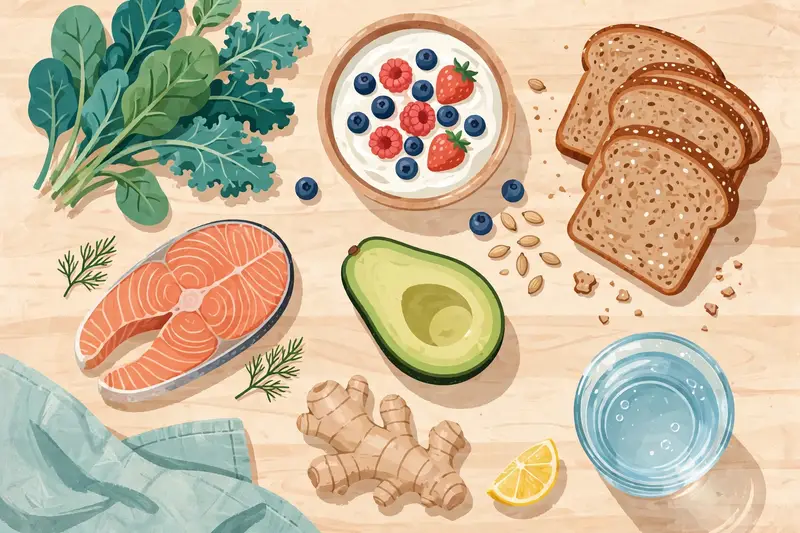
Your gut does a lot of quiet work for you. It breaks down your food, absorbs the nutrients, keeps things moving, and talks to the rest of your body in ways scientists are still learning about. Most of the time, you do not think about it at all. And then one day you do, because something feels off: bloating after meals, sluggish digestion, low energy, or just a general sense that your stomach is not as settled as it used to be. That is usually the moment women start asking me what they should eat for gut health, and the answer is simpler and more hopeful than most of them expect.
This is my gut health diet plan: what to eat daily, what to ease back on, and how to put it together into real meals without turning your kitchen upside down. It is not a cleanse, not a detox, and not a list of forbidden foods. It is a way of eating that feeds the good bacteria in your gut, gives your digestion the fiber and water it needs, and leaves room for the foods you love. I have used this plan myself, I have shared it with the women in my coaching group, and it is the plan I come back to whenever my own gut needs a little attention.
A quick note before we start: I am a certified personal trainer and certified nutrition coach, not a doctor, and this article is general information, not medical advice. If you have ongoing digestive problems, pain, or a diagnosed condition, please talk with your doctor or a registered dietitian before changing how you eat. Your gut deserves professional guidance when something is truly wrong, and this plan is for everyday support, not treatment.
What Your Gut Actually Wants
Think of your gut as a garden. It is full of trillions of tiny organisms, mostly bacteria, that help you digest food, make certain vitamins, and keep the lining of your gut strong. Like any garden, it does best with variety, regular feeding, and a little care. The bacteria that help you thrive love fiber, which comes from plants, and fermented foods, which bring in helpful live cultures. They do not love a steady diet of highly processed food, a lot of added sugar, and very little variety. None of that is a moral judgment. It is just how the garden works.
The other thing your gut wants is consistency. It likes regular meals, enough water, and time to do its work. It does not like being rushed, skipped, or flooded with a huge meal at ten at night after a day of eating almost nothing. Some of the women I work with are surprised to learn that when they eat matters almost as much as what they eat, and that simply eating three regular meals instead of grazing all day can settle their stomach more than any single food ever could. If you want to read more about how I think about gut health as a whole, my post on the power of gut healing is a good place to start, and my gut health page gathers the rest of what I have written on the topic.
One more thing your gut wants: movement. Gentle movement after a meal, like a ten-minute walk, helps digestion in a way that sitting still does not. It is a small habit with an outsized payoff, and it costs nothing. If you take one thing from this article besides the food lists, let it be the after-dinner walk.
Foods to Eat Every Day
Here are the foods I build this plan around. You do not need all of them every day. You need a few of them, most days, in real meals you enjoy. The first group is fiber-rich plants: vegetables, fruits, beans, lentils, oats, and whole grains. Fiber is the main food for your gut bacteria, and most of us do not eat nearly enough of it. Aim for a vegetable or fruit at every meal, beans or lentils a few times a week, and oats or whole grains most mornings. That alone will change your gut more than any supplement.
The second group is fermented foods: yogurt with live cultures, kefir, sauerkraut, kimchi, miso, and tempeh. These foods bring live bacteria into your gut, and a small serving a day is enough. A cup of yogurt with breakfast, a spoonful of sauerkraut with lunch, or a cup of miso soup with dinner will do it. You do not need to eat them all, and you do not need a lot. Pick the one you actually like, and eat it regularly. If fermented foods are new to you, start small and see how your stomach responds.
The third group is the quiet supporters: water, healthy fats like olive oil and avocado, and a variety of herbs and spices. Water keeps fiber moving through your system, and fiber without water can make you feel worse, not better, so drink steadily through the day rather than all at once. Olive oil and avocado give your meals staying power and flavor. And herbs and spices are not just for taste: ginger, turmeric, and garlic all have a long history in traditional cooking for digestion, and they make plain food taste like something you actually want to eat.
Foods to Ease Back On
I do not believe in forbidden foods, because forbidden foods have a way of becoming the only thing you can think about. But there are foods that tend to make guts unhappy when they show up every day, and it is worth knowing which ones they are. The biggest group is highly processed foods: things that come in a box or a bag with a long list of ingredients you would not find in a kitchen. A little here and there is fine. Every day, in large amounts, is when most women notice the difference.
Added sugar is the second one to watch, not because sugar is poison, but because a lot of it, every day, feeds the kinds of bacteria you do not want to encourage, and it crowds out the foods that do help. The same goes for alcohol, which can irritate the gut lining, and for very large, very late meals, which ask your gut to do its hardest work when it would rather be resting. None of these need to disappear from your life. They just need a smaller place in it, and your gut will notice the difference within a week or two.
One caution: if you think a specific food is bothering you, do not cut out whole food groups on a guess. That is a job for a doctor or a registered dietitian, who can help you test things properly. Cutting out foods without guidance often makes eating harder and less enjoyable, and it rarely fixes the problem. If you want a structured reset before you start this plan, my 7-day gut reset diet plan for beginners is a gentle, one-week plan that pairs well with the daily eating pattern in this article.
A Sample Day of Eating
Here is what a day on this plan looks like, using ordinary food you can find at any grocery store. Breakfast: oatmeal made with water or milk, topped with berries, a spoonful of ground flaxseed, and a dollop of yogurt with live cultures. If oats are not your thing, eggs with spinach and a slice of whole-grain toast works just as well. The point is fiber plus protein plus something fermented, and a glass of water before you start.
Lunch: a big salad or a grain bowl with greens, chickpeas or lentils, cucumber, carrots, a drizzle of olive oil, and a squeeze of lemon. Add a piece of fruit and a small handful of nuts. If you need something warm, a bowl of lentil soup with whole-grain bread is just as good, and it is the kind of lunch that keeps you full until dinner without making you sleepy. Dinner: salmon or chicken with roasted vegetables and brown rice or quinoa, plus a spoonful of sauerkraut or kimchi on the side if you like it. Or a stir-fry with tempeh, broccoli, peppers, and ginger over rice. Keep dinner a little lighter than lunch if you can, and finish eating at least two hours before bed.
Snacks, if you want them: an apple with peanut butter, a handful of almonds, carrot sticks with hummus, or a small cup of kefir. Drink water through the day, and herbal tea in the evening if you like it. That is the whole plan. Nothing exotic, nothing expensive, nothing you have to order online. Just real food, eaten regularly, with enough water and a little variety.
A Simple 7-Day Sample Menu
If a single day is helpful, a week is even better, so here is a loose seven-day menu you can follow or borrow from. Monday: oatmeal and berries for breakfast, lentil soup for lunch, chicken and roasted vegetables for dinner. Tuesday: yogurt, banana, and oats for breakfast, a chickpea salad for lunch, salmon and quinoa for dinner. Wednesday: eggs and spinach on toast for breakfast, leftover salmon in a wrap for lunch, a bean chili with brown rice for dinner. Thursday: a smoothie with kefir, berries, and spinach for breakfast, a grain bowl for lunch, a stir-fry with tempeh and ginger for dinner.
Friday: oatmeal with apples and walnuts for breakfast, a tuna or chickpea sandwich on whole-grain bread for lunch, pasta with vegetables and white beans for dinner. Saturday: pancakes made with oats and banana for breakfast, a big salad with chicken for lunch, and a homemade pizza with vegetables for dinner, because gut health should include pizza. Sunday: eggs and toast for breakfast, soup and bread for lunch, and a slow, simple roast with root vegetables for dinner. Leftovers count as meals, and repeating a breakfast you like is a feature, not a failure.
If you want more structure, my clean eating meal plan for beginners has a full week of breakfasts, lunches, and dinners, and my 4 week gut protocol is a longer program for women who want guided support. You can also find a gentler, longer version of a reset in my ultimate gentle gut reset 21 day program. Start with this article, and use those when you are ready for more.
The Habits Around the Food
What you eat matters, but how you eat matters too, and this is the part most diet plans skip. Eat sitting down, at a table, without your phone in your hand. Chew slowly. Put your fork down between bites. It sounds old-fashioned, and it is, but your gut does its best work when you give it time and attention, and it does its worst work when you eat in the car, standing at the counter, or scrolling through your email.
Try to keep your meals roughly regular: breakfast within a couple of hours of waking, lunch in the middle of the day, dinner in the early evening. Your gut likes a rhythm, and a rhythm is easier to keep than a perfect diet. And take that ten-minute walk after your biggest meal. It is the single easiest habit in this whole plan, and it is the one women tell me helps the most. Walk slowly, breathe, and let your food settle. Your gut will thank you.
Finally, give the plan time. Gut bacteria do not change overnight. Most women notice small differences in the first week or two: less bloating after meals, more regular digestion, a little more energy in the afternoon. Bigger changes take a month or more. That is normal, and it is why this plan is built on foods you can eat for the rest of your life, not on a two-week sprint you will abandon. The best gut health diet is the one you are still eating in a year.
My Honest Take on Eating for Your Gut
I have tried a lot of eating plans over the years, and here is what I have learned: the ones that work are the ones you can actually live with. The gut health plan in this article works because it is not a punishment. It is oatmeal and berries, lentil soup, roasted vegetables, yogurt, and the occasional homemade pizza. It is food you recognize, cooked in your own kitchen, eaten at a table, with water and a walk afterward. That is not a diet. That is a life, and it is a life your gut will be happy to live in.
So start tomorrow, or start at your next meal. Add a vegetable to your plate, swap one processed snack for an apple with peanut butter, drink a glass of water, and take a ten-minute walk after dinner. That is a gut health diet plan, and it starts with the very next thing you eat. Your gut has been working for you all along. This is your chance to work for it.
This article shares general information and my own experience. It is not medical advice, and it is not a substitute for talking with your doctor, a registered dietitian, or another qualified professional about your own health, especially before you change how you eat or exercise. Every body is different, so please listen to yours and get personal guidance when you need it.