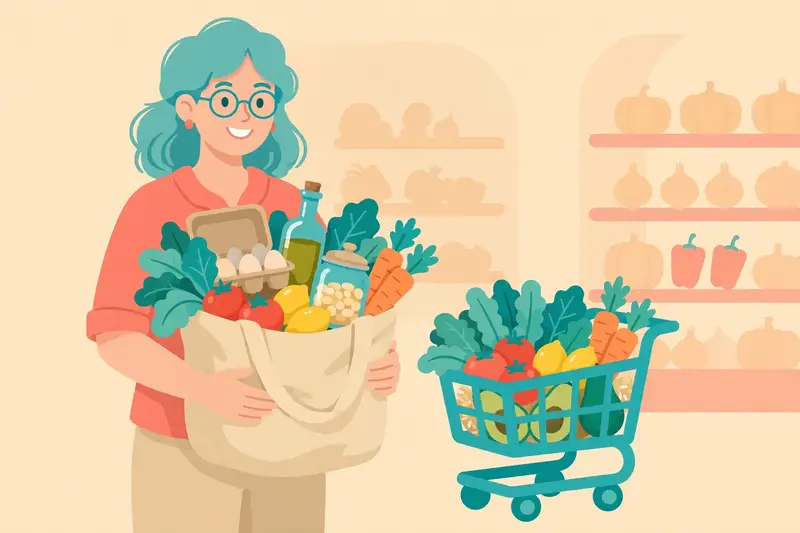
I still remember my first clean eating grocery trip. I walked into the store with the best intentions, a reusable bag, and absolutely no plan. Twenty minutes later, I was standing in the middle of the snack aisle, holding a box of crackers I did not need, wondering how I had ended up there when I had come in for vegetables and chicken. I left with a cart full of odds and ends, a receipt that made me wince, and a fridge that still did not add up to a single complete meal.
That trip taught me something I now tell every woman I coach: clean eating does not start in your kitchen. It starts in the grocery store, with a list. When your shelves and fridge are stocked with real, simple foods, the healthy choice becomes the easy choice. You do not need willpower at 6 p.m. on a Tuesday if dinner is already sitting in your fridge, ready to cook.
This guide is the list I wish someone had handed me back then. It covers exactly what to buy, aisle by aisle, in the order you should shop them, plus what to skip and how to keep the whole trip affordable. It is built for a beginner. You do not need a specialty store, a big budget, or a pantry full of ingredients you cannot pronounce. You need a solid foundation, and you can build it in one trip.
What Clean Eating Really Means at the Grocery Store
Walk into any grocery store and you will see two very different kinds of food. Around the edges of the store, you find the fresh stuff: produce, meat, fish, eggs, dairy. Down the middle aisles, you find boxes, bags, and jars that can sit on a shelf for months. Clean eating leans heavily toward the edges and treats the middle aisles as a place for a few staples, not the main event.
That does not mean you can never buy anything in a box. Whole grain pasta, canned beans, and rolled oats all live in the middle aisles, and they are wonderful clean foods. The question is not where a food sits in the store. The question is what is in it. I read labels with a simple test: if I recognize every ingredient and could picture it in my own kitchen, it passes. If the list is a paragraph long and reads like a chemistry experiment, it goes back on the shelf.
I also want to say something about perfection, because it trips up more beginners than any ingredient ever will. Your first clean eating grocery trip does not need to be perfect. It needs to be good enough to cook real meals this week. If you buy ten great foods and one not-so-great one, you still win. Progress at the grocery store looks like a cart that is a little greener, a little simpler, and a little closer to real food than last week.
How to Shop the Store in Order
The order you shop matters more than most people think. Grocery stores are designed to tempt you, and the layout is not an accident. The sweet-smelling bakery sits near the entrance for a reason, and the snacks and soda crowd the checkout lanes for a reason too. Having a route protects you from those traps.
Here is the route I use every week, and the route I recommend to beginners. First, produce. Second, meat, fish, and eggs. Third, dairy. Fourth, the pantry aisles for whole grains, beans, nuts, oils, and seasonings. Fifth, the freezer, for frozen vegetables and fruit. Skip the bakery, the snack aisle, the soda aisle, and the candy at the checkout unless something on your list lives there.
Shopping in this order does three things. It fills your cart with the most important foods first, so by the time you reach the tempting aisles, you have less room and less appetite for impulse buys. It keeps cold foods cold, because they go in last-ish and head straight home. And it saves time, because you are following your list instead of wandering.
If you want a plan for turning these groceries into meals once you get home, my clean eating meal plan for beginners shows you how to build a simple week of breakfasts, lunches, and dinners from exactly this kind of shopping trip.
Start in Produce: The Foundation of Your Cart
Produce should take up the biggest share of your cart, and it should be the first thing in it. My rule of thumb is simple: aim for at least five different vegetables and three different fruits each week, in a mix of colors. Different colors mean different nutrients, and variety keeps meals interesting. If your cart looks like a rainbow, you are doing it right.
For vegetables, start with the workhorses that show up in meal after meal. Leafy greens like spinach and romaine are the base of salads and smoothies and wilt beautifully into soups and scrambled eggs. Broccoli, cauliflower, and green beans roast well, steam fast, and hold up in a lunchbox. Bell peppers, cucumbers, carrots, and celery are wonderful raw with hummus or sliced into salads. Zucchini and sweet potatoes are filling, flexible, and easy to cook in big batches. Onions and garlic are not glamorous, but they are the flavor base of almost every savory dish I cook, so they go on my list every single week without fail.
For fruit, pick a mix of ready-to-eat options. Bananas and apples are the grab-and-go pair I keep on the counter all week. Berries are wonderful on oatmeal and yogurt, and they freeze beautifully if you buy extra. Avocados deserve a special mention: they are rich in healthy fats, and half an avocado turns plain toast or a salad into something satisfying. Buy them slightly firm and let them ripen on the counter.
Fresh is wonderful, but frozen vegetables and fruit deserve just as much space in your plan, and I buy them every week. They are picked and frozen at peak ripeness, they cost less per serving than fresh out of season, and they never go bad in your crisper drawer. Frozen broccoli, green beans, peas, mixed berries, and stir-fry blends are the backup team that saves dinner on busy nights. Keep a few bags in your freezer at all times, and you will never be stuck with nothing to cook.
A practical tip for beginners: buy what you will actually eat this week, not what you wish you would eat. If you have never cooked kale, do not buy three bunches of it on your first trip. Buy the spinach you already like, the broccoli you already cook, and one new vegetable to try. Next week, try another one. Your taste buds and your confidence grow together, one vegetable at a time.
Protein: The Anchor of Every Meal
Protein is what keeps you full between meals, and it is the anchor of every plate I build. A good clean eating grocery list includes several kinds of protein, because variety keeps meals interesting and covers your nutritional bases. You do not need a freezer full of meat. You need a few reliable options, and enough of each to cover the week.
Chicken is the workhorse for most of the women I coach. Boneless, skinless chicken breasts and thighs are lean, affordable, and endlessly flexible. I buy a family pack, cook a big batch on Sunday, and use it in salads, wraps, stir-fries, and soups all week. Ground turkey is another favorite. It cooks fast, takes on the flavor of whatever you season it with, and works beautifully in tacos, meatballs, and chili.
Eggs are the most affordable and versatile protein in the store, and I buy them every week without exception. A dozen eggs covers breakfasts, hard-boiled snacks, quick dinners, and baking. Egg whites are useful too, but whole eggs bring healthy fats and nutrients along with the protein, and for most women, whole eggs are a perfectly good choice.
Plant proteins round out the list and keep it affordable. Canned black beans, chickpeas, and kidney beans are cheap, filling, and ready in minutes when you rinse them. Lentils cook in about twenty minutes with no soaking, and they are wonderful in soups and salads. Tofu and tempeh are worth trying if you are curious: press the tofu, cube it, season it well, and roast it until the edges crisp. My protein for women, how much do you need guide explains how much protein to aim for each day and how to spread it across your meals, which helps you decide how much of each of these to buy.
Pantry Staples: The Foods That Make Meals Possible
Your pantry is the quiet backbone of clean eating. It is where the foods live that turn fresh produce and protein into actual meals. A well-stocked pantry means you can cook dinner from what you already have, even on a night when the fridge looks bare. Build it gradually, one or two items per trip, and within a month you will have a pantry that works for you.
Whole grains are the first pantry category. Rolled oats are my top pick: they cost very little, they keep for months, and they make breakfast in five minutes. Brown rice and quinoa are the grains I reach for at dinner. Quinoa cooks in about fifteen minutes and brings protein along with it, which makes it a favorite for grain bowls. Whole grain pasta and whole wheat bread belong on the list too, if you enjoy them. Check the label and look for the word whole as the first ingredient.
Canned and dried beans and lentils are the second category, and they are the best bargain in the whole store. Canned beans are ready to eat after a quick rinse. Dried lentils are just as easy and even cheaper. Keep black beans, chickpeas, and kidney beans on hand, plus red lentils for soup. They stretch a meal, add fiber, and make a pot of soup or chili feed a family for very little money.
Nuts, seeds, and nut butters are the third category. Raw almonds, walnuts, pumpkin seeds, and chia seeds add crunch and healthy fats to oatmeal, salads, and yogurt. Natural peanut butter or almond butter, with just nuts and maybe salt on the label, is a staple for toast, smoothies, and sauces. Buy the small bag or jar at first if you are unsure, and store nuts in the fridge or freezer so their healthy oils stay fresh.
Oils, vinegars, and seasonings are the fourth category, and they are what make simple food taste like a meal. Extra virgin olive oil is my everyday cooking and salad oil. Balsamic vinegar and lemon juice brighten vegetables and grains. A basic spice collection covers almost everything: salt, black pepper, garlic powder, onion powder, paprika, cumin, chili powder, dried oregano, and cinnamon. With those nine jars, you can season a roast chicken, a pot of chili, a pan of vegetables, and a bowl of oatmeal, and they will all taste different.
Dairy and Dairy Alternatives
Dairy can be a helpful part of a clean eating kitchen, and the rule here is the same as everywhere else: pick the simplest version. Plain Greek yogurt is my top dairy pick. It is thick, filling, high in protein, and it works for breakfast with berries and oats, for lunch in place of sour cream, and for a quick snack with a drizzle of honey. Look for plain, unsweetened yogurt, because the flavored cups often carry as much sugar as a dessert.
Cheese belongs on the list in modest amounts. A block of cheese you grate yourself is a better choice than pre-shredded cheese, which often contains additives to keep it from clumping. Feta, fresh mozzarella, and sharp cheddar are all wonderful in small amounts. A little cheese adds a lot of flavor, and using a little on purpose is more satisfying than a big pile of a bland one.
Healthy Fats: Small Amounts, Big Flavor
Fat is not the enemy of clean eating. Healthy fats make food taste good, help you feel full, and carry flavor through a meal. The trick is choosing the right fats and using them with a light hand. A tablespoon of olive oil in a pan, a quarter of an avocado on toast, a small handful of nuts on a salad. Those small amounts add up to a satisfying meal without turning it heavy.
Extra virgin olive oil is the fat I use most, for roasting vegetables, dressing salads, and cooking eggs and chicken. Avocados, nuts, seeds, and fatty fish like salmon are the other healthy fats on my regular list. Each one brings something different to the table, so variety matters here just like it does with produce.
What to Skip: The Short List
Knowing what to leave behind is just as important as knowing what to buy, and the skip list is shorter than most beginners expect. You do not need to memorize a hundred forbidden foods. You need to recognize a handful of patterns and walk past them.
First, sugary drinks. Soda, sweet tea, sports drinks, and most juices are sugar in liquid form, and they do not fill you up the way food does. Water is the everyday drink in my kitchen, with sparkling water and unsweetened tea as the fun alternatives. If you love juice, eat the fruit instead. An orange fills you up. A glass of orange juice mostly does not.
Second, highly processed snacks: chips, cheese puffs, cookies, candy, and most of the brightly colored boxes in the snack aisle. These are designed to be hard to stop eating, and they are usually built from refined flour, sugar, salt, and oils you would never cook with. If snacks are your weakness, buy the foods that make snacking easy at home instead: apples and peanut butter, carrots and hummus, Greek yogurt and berries.
Third, frozen meals, instant noodles, and boxed dinners with long ingredient lists. They are convenient, but they are usually high in sodium and low in the nutrients that keep you full. A pot of soup from your own kitchen takes about the same time as waiting for a frozen meal, and it tastes better. My healthy soup recipes for weight loss collection is a good place to start, because soup is one of the easiest ways to turn simple groceries into a week of lunches.
The Simple Starter List
Here is the list I would hand a beginner walking into the store for the very first time. It is enough to cook a week of real meals, and it fits in one cart without overwhelming you. Take this list, adjust it to your tastes, and you are ready to shop.
- Produce: spinach, romaine, broccoli, bell peppers, carrots, cucumbers, zucchini, sweet potatoes, onions, garlic, bananas, apples, berries, lemons, and avocados.
- Protein: chicken breasts or thighs, ground turkey, eggs, canned black beans, canned chickpeas, lentils, and canned tuna in water.
- Pantry: rolled oats, brown rice, quinoa, whole grain pasta, whole wheat bread, canned tomatoes, low-sodium broth, natural peanut butter, raw almonds, and walnuts.
- Dairy: plain Greek yogurt, milk or unsweetened plant milk, and a block of feta or cheddar cheese.
- Healthy fats and flavor: extra virgin olive oil, balsamic vinegar, and a basic spice set of salt, pepper, garlic powder, paprika, cumin, chili powder, oregano, and cinnamon.
- Freezer: frozen broccoli, frozen green beans, frozen mixed berries, and a frozen stir-fry vegetable blend.
Look at that list again and notice what is not on it. No soda, no chips, no frozen meals, no sugary cereal, no boxed dinners. Nothing on the list is exotic, nothing requires a specialty store, and nothing costs a fortune. It is ordinary food, bought on purpose, and it is enough to build breakfast, lunch, and dinner for a week.
Once you have these groceries at home, the next step is turning them into meals without overthinking it. My meal prep for beginners, simple weekly plan walks you through cooking a few big batches on one day so the rest of the week practically cooks itself.
Budget Tips That Actually Work
Clean eating has a reputation for being expensive, and I understand why. A cart full of fresh salmon, berries, and specialty products adds up fast. But clean eating at its simplest is some of the cheapest food in the store. Beans, lentils, oats, eggs, carrots, cabbage, bananas, and brown rice are all inexpensive, filling, and genuinely good for you. The expensive version of clean eating is a choice, not a requirement.
The single best budget habit is to plan your meals before you shop and shop from that plan. A plan stops you from buying food you will not use, and food you do not use is money in the trash. Start with three or four dinners for the week, build your list from those meals, and let breakfast and lunch repeat simple combinations like oatmeal, eggs, salads, and leftovers.
Use your freezer as a budget tool. Buy chicken or ground turkey in the family pack when it is on sale, divide it into meal-sized portions, and freeze what you will not cook this week. Freeze bread, berries, and vegetables before they go bad. A full freezer is a safety net that stops expensive last-minute takeout, because there is always something at home to cook.
Putting It All Together: Your First Clean Eating Week
Let me show you what a week looks like when this list comes home with you. Breakfast starts with oatmeal and berries, or eggs with spinach and whole wheat toast. My healthy breakfast ideas for weight loss page has more combinations, but the pattern is simple: protein, fiber, and something fresh, every morning.
Lunch is where leftovers shine. Last night's chicken and roasted vegetables become today's salad or wrap. A pot of soup made on Sunday becomes lunch on Monday, Tuesday, and Wednesday. A can of chickpeas, a chopped cucumber, tomatoes, lemon, and olive oil becomes a salad in ten minutes. Lunch does not need to be a project. It needs to be ready, and food you already cooked is the most ready food there is.
Dinner follows a plate I can build without a recipe. Half the plate is vegetables, a quarter is protein, and a quarter is a whole grain or a starchy vegetable like sweet potato. Chicken, brown rice, and roasted broccoli. Salmon, quinoa, and green beans. Turkey chili with beans and a side salad. Tacos with ground turkey, black beans, peppers, and avocado. The foods change, the pattern stays the same, and that pattern is what makes dinner easy after a long day.
I want to leave you with the thought I come back to every time I coach a beginner. You do not need a perfect pantry, a perfect week, or a perfect cart. You need a list, a route through the store, and a fridge with real food in it. Start with the starter list above, shop the store in order, and cook one simple meal from what you bought. That is how clean eating begins, not with a dramatic overhaul, but with a single ordinary grocery trip done on purpose. And next week, you will do it again, a little faster, a little cheaper, and a little more your own.
This article is general information only and is not medical advice. It is not a substitute for professional help. If you have a health condition, dietary restriction, or concern about your nutrition, please talk with a qualified healthcare professional or registered dietitian before making changes to how you eat.